icon-of-iso-egypt-tours-portal
egypt-tours-portal-csr-icon
egypt-tours-portal-dmc-icon

Find Your Perfect Adventure

Whether you have a few hours or a full week, we have the perfect itinerary for you. Choose your destination, book easily, and let our local experts take care of the rest.

Discover the Wonders of Cairo & Giza

Dive deep into the heart of Egypt’s most iconic destinations. Browse through our comprehensive guide below to learn about the architectural marvels, majestic tombs, and historic fortresses that await you.

  • Historical Background: The Giza pyramids were the brainchild of three generations of Egyptian kings: Pharaoh Khufu, his son Khafre, and his grandson Menkaure. The entire complex was part of a royal mortuary tradition designed to help the pharaohs ascend to the afterlife as gods.

  • The Great Pyramid of Khufu: Built around 2560 BCE, this is the largest and oldest pyramid, originally towering 146.6 meters (481 feet) tall. It is constructed from an estimated 2.3 million stone blocks, weighing an average of 2.5 to 15 tonnes each.

  • The Pyramid of Khafre: Slightly smaller than Khufu's pyramid, it originally stood 143 meters (471 feet) high and is notable for retaining some of its smooth limestone casing at the top.

  • The Pyramid of Menkaure: The smallest of the three principal pyramids, with a completed height of 66 meters (218 feet).

  • The Great Sphinx: The oldest known monumental sculpture in Egypt, stretching 73 meters long and towering 20 meters high. It features the body of a crouching lion symbolizing immense royal power, and the head of a human representing divine intelligence.

  • The Necropolis of Saqqara: Serving as the vast ancient burial ground for the capital city of Memphis, this open-air museum contains tombs and monuments spanning over 3,000 years of ancient Egyptian history.

  • The Step Pyramid of Djoser: Built during the 27th century BC by the architect Imhotep, it is the oldest colossal stone building in history. The unique design consists of six stacked flat tombs (mastabas), originally standing 62 meters tall.

  • Memphis (Mit Rahina): Memphis was the first capital of a unified Egypt, and its legacy is preserved today at the Mit Rahina Open Air Museum.

  • Colossus of Ramesses II & Alabaster Sphinx: The museum features a massive, 10-meter-tall limestone statue of Ramesses II and a stunning 80-ton Alabaster Sphinx carved from a single block during the 18th Dynasty.


  • Sneferu's Vision: The necropolis of Dahshur serves as the world’s most significant architectural laboratory, home to two monumental structures built by Pharaoh Sneferu that paved the way for the wonders of the ancient world.

  • The Bent Pyramid: This unique pyramid started with a steep 54-degree angle, but engineers abruptly reduced the slope to a safer 43 degrees midway to prevent structural instability, giving it a "bent" silhouette. It famously retains the majority of its smooth, white Tura limestone casing.

  • The Red Pyramid: Named for the rusty-red hue of its core blocks of local limestone, this was Egypt’s first successful true smooth-sided pyramid. It rises to a height of 104 meters and features a unique corbelled ceiling design to effectively disperse the immense weight.

  • The Citadel of Saladin: A 12th-century medieval fortress built by Saladin to defend against Crusaders, which served as Egypt’s seat of power for centuries.

  • The Mosque of Muhammad Ali: Commissioned by the founder of modern Egypt, Muhammad Ali Pasha, this mosque was built inside the Citadel between 1830 and 1857.

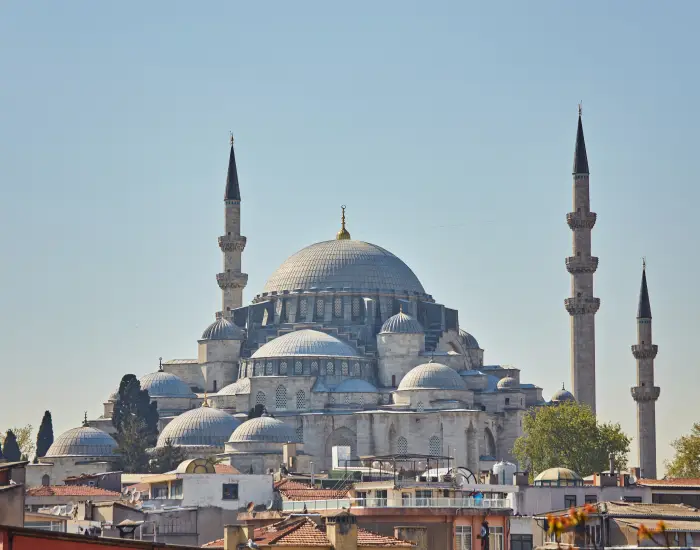
  • Alabaster Mosque Architecture: Famous for its beautiful Ottoman-style architecture, it features a large central dome, two tall slender minarets, and walls elegantly covered with alabaster stone.

  • Babylon Fortress: An ancient Roman fortress dating mainly to the reign of Emperor Diocletian around the third century AD, originally built to protect a canal connecting the Nile with the Red Sea.

  • The Hanging Church: Officially known as the Church of the Virgin Mary, it earned its name because it was built above the southern gatehouse of the Babylon Fortress, giving the impression that it is suspended over the walls.

  • The Church of Abu Serga: One of the oldest churches in Egypt, where Christian tradition states the Holy Family found refuge in a cave beneath the church during their journey.

  • The Ben Ezra Synagogue: Originally built as a Christian church and later converted in the ninth century, it is one of the oldest Jewish monuments in Egypt and is famous for the discovery of the Cairo Geniza manuscripts.

  • Historic Islamic Cairo: Founded in the 10th century during the Fatimid era, this district is a recognized UNESCO World Heritage Site famous for its outstanding Islamic architecture, ancient streets, and majestic palaces.

  • Famous Landmarks: The area is home to iconic religious and historical sites, including Al-Azhar Mosque, Al-Hussein Mosque, and Al-Muizz Street, which beautifully showcase centuries of Islamic art.

  • Khan El Khalili Origins: Established in 1382 during the Mamluk period, this historic bazaar was originally built as a major trading center for merchants from Africa, Asia, and Europe.

  • A Vibrant Marketplace: Today, the market's narrow streets and colorful shops offer a wide variety of goods, including handmade jewelry, brass items, spices, perfumes, textiles, and traditional lanterns.

  • Authentic Cultural Experience: Visitors can experience the rich traditions of Egyptian culture by practicing the art of bargaining, and later relax with a traditional drink at the famous El Fishawy Café, one of Cairo’s oldest coffeehouses.